


English

Reading
Reading is one of life’s most essential skills. At Moorcroft Wood Primary School, we hope that all children will develop a love of books, enthusiasm for improving their reading skills and grow to be confident, competent readers. Reading is happening all the time in our classrooms and across school. It is not only taught in Phonics and English lessons, but children are practising and using their 'reading' constantly across all subjects too.
Pupils have opportunities to undertake guided, shared and independent reading throughout the school. A diverse range of books and a staged reading scheme are available for pupils to take home to read.
As a school, we utilise Reciprocal Reading strategies. Reciprocal reading involves a dialogue between the teacher and children. It is a group activity where the leader first models a number of effective reading strategies which the children learn to use for themselves independently. It is an interactive teaching technique and is suitable for all readers. Reciprocal reading has four key strategies that the children will become familiar with and can use in not only guided reading session, but also other areas of the curriculum.
|
Predict |
What are we going to read about in the text selection? (Inference) |
|
Clarify |
Which words and phrases so we need to find the meaning of? (Word meanings) |
|
Question |
Can we ask questions to help us learn more about the text? (knowledge and understanding in context) |
|
Summarise |
What are the main ideas in this section? (Putting it into words) |
Home Reading at Moorcroft Wood
Children, who partake in the phonics programme, will take home an RWI Book Bag reading book matched to the RWI level they are currently working on in school. They will have read a different RWI text with an adult in school and the book they take home will reinforce the learning that has taken place in class. Children will change their RWI Book Bag reading book at least once a week.
Children who do not need to continue to follow the phonics scheme, will bring home a colour banded book from their suitable colour banding. These will be changed once a week, but can be changed more frequently if the child has read it on several occasions and has had their reading diary signed by an adult.
If you want further information about the curriculum content your child is covering please call the school office to arrange an appointment to see the subject leader.
Supporting Your Child at home
Reading at home and daily practice is vital in helping to improve your child's future reading and learning. At Moorcroft, we know how important it is for teachers and parents to work together to give your child the best start.
Reading together at home is one of the easiest but most important ways in which you can help your child. As you share books you are helping improve your child’s reading skills and also showing them how important and enjoyable reading is.
The more a child reads, the quicker they will develop as readers. It is often recommended that beginning readers spend 15 or 20 minutes reading each day (in addition to the reading they do at school). However, the amount of reading a child does is most important, not the amount of time they spend doing it.
We have put together some parent guides to help support your child with their reading at home.
We will also be sending these home, so please look out for these in your child's book bag.
EYFS Tips for Parents and Carers
Recommended Reads
Developing a Love for Reading
We are having a real push in school in developing the love for reading as we know that when children develop a love for reading, it can impact their understanding and love for the whole curriculum.
Every fortnight, class libraries are open to parents and carers, giving children the opportunity to choose a book to take home and enjoy together with someone special.
To encourage children to read regularly, we have introduced this opportunity for families to visit our classroom libraries together. By involving parents and carers in the book selection process, we hope to build constant reading routines at home and nurture a lifelong love of reading.
In addition, we have introduced weekly visits to our local library to further promote a love of reading. Throughout the year, each class will have the opportunity to visit the library and choose their own book to borrow and enjoy.
Alongside this, we have introduced a Reading Suitcase and Reading Raffle system, where not only are there exciting prizes to be won.
Writing
Intent
At Moorcroft Wood Academy, writing is taught in whole class lessons so that all children have access to the age-related skills and knowledge contained in the National Curriculum. We believe good teaching of phonics, reading and handwriting go ‘hand in hand’ to produce confident writers. We want all of our children to be able to confidently communicate their knowledge and ideas through their writing. We will ensure:
- Each individual is guided and nurtured on their own personal journey to become a successful writer
- All children are given exciting and purposeful writing opportunities that engage them
- All children will acquire a wide vocabulary and be able to spell new words by effectively applying the spelling patterns and rules they learn throughout their time in primary school
- All children have a clear understanding of grammar and apply it effectively to their writing
- Children write clearly, accurately and coherently
- Children have the necessary tools to adapt their language and style for a range of contexts, purposes and audiences
- All children are encouraged to take pride in the presentation of their writing, by developing a legible handwriting style by the time they move to secondary school
We take children through a journey in order to improve them as writers. We want children to be driven to write by purpose. These include: to create, to entertain, to express, to persuade, to inform and to record. Writing is a creative art and a form of expression that allows pupils at Moorcroft Wood Academy to have a voice and express themselves.
I am a Clever Writer
At Moorcroft Wood Academy we use the 'I am a Clever Writer' approach as a basis for teaching writing skills. We ensure our children write everyday, practising newly taught skills discreetly before layering them with previously taught skills.
I am clever writer is a clearly structured approach to teach writing, where each strand of writing is broken down into small steps to allow pupils to experience success with their writing. Teaching sequences are carefully planned to ensure time for consolidation and the development of a skill relating to the' I am a Clever Writer Checklist'.
The teachers create a WAGOLL (what a good one looks like) based on the text/visual literacy that is being shared to model how to include the features in their own writing. At the end of the sequence of learning an extended piece of writing called a Star Write is completed where children bring together all the skills they have been taught that week. The strands taught match the requirements of the national curriculum and become increasingly more complex throughout the year as the children become more skilled. This approach allows teachers to teach specific skills discretely and ensure they are layered to give our children the tools they need to be confident writers.
If you want further information about the curriculum content your child is covering please call the school office to arrange an appointment to see the subject leader.
Handwriting
Time must be given to practise and perfect handwriting to ensure children go beyond accuracy to fluency in letter formation. At Moorcroft Wood, we use the ‘Letterjoin’ scheme for handwriting. In EYFS, children will learn lowercase correctly and, in Year 1, they begin to join. As stated in the English Review (May, 2022), it is imperative that children correctly learn unjoined handwriting before using some of the diagonal and horizontal strokes that are needed to join letters. Teachers will identify misconceptions and address these in all lessons.
Spellings
At Moorcroft Wood Academy, we recognise that the accurate use of spelling underpins confident writing and supports pupils’ ability to communicate clearly and effectively. We follow a structured, consistent approach to spelling across the school, ensuring progression from phonics foundations in the early years to more advanced spelling knowledge in Key Stage 2.
Spelling Shed is used as our main scheme to support the teaching of spelling across Key Stage 1 and Key Stage 2. Each week, a specific spelling rule or pattern is introduced and taught explicitly.
An example of our weekly sequence is as follows:
- On Friday, pupils complete a spelling test based on the rule taught that week.
- Immediately after the test, the next week’s spelling rule is introduced. Pupils explore the rule through interactive activities, such as online Spelling Shed games, writing and sharing sentences, modelling oral sentences, exploring word definitions, and applying the spelling rule in context.
- During the following week, on three mornings as part of SODA (Start of Day Activities), pupils complete Spelling Shed resource sheets. These reinforce the weekly spelling rule and provide additional practice of the test words. This repeated exposure helps embed patterns and strengthen long-term recall, culminating in the next spelling test on Friday, where the cycle continues.
Celebrating Our Success
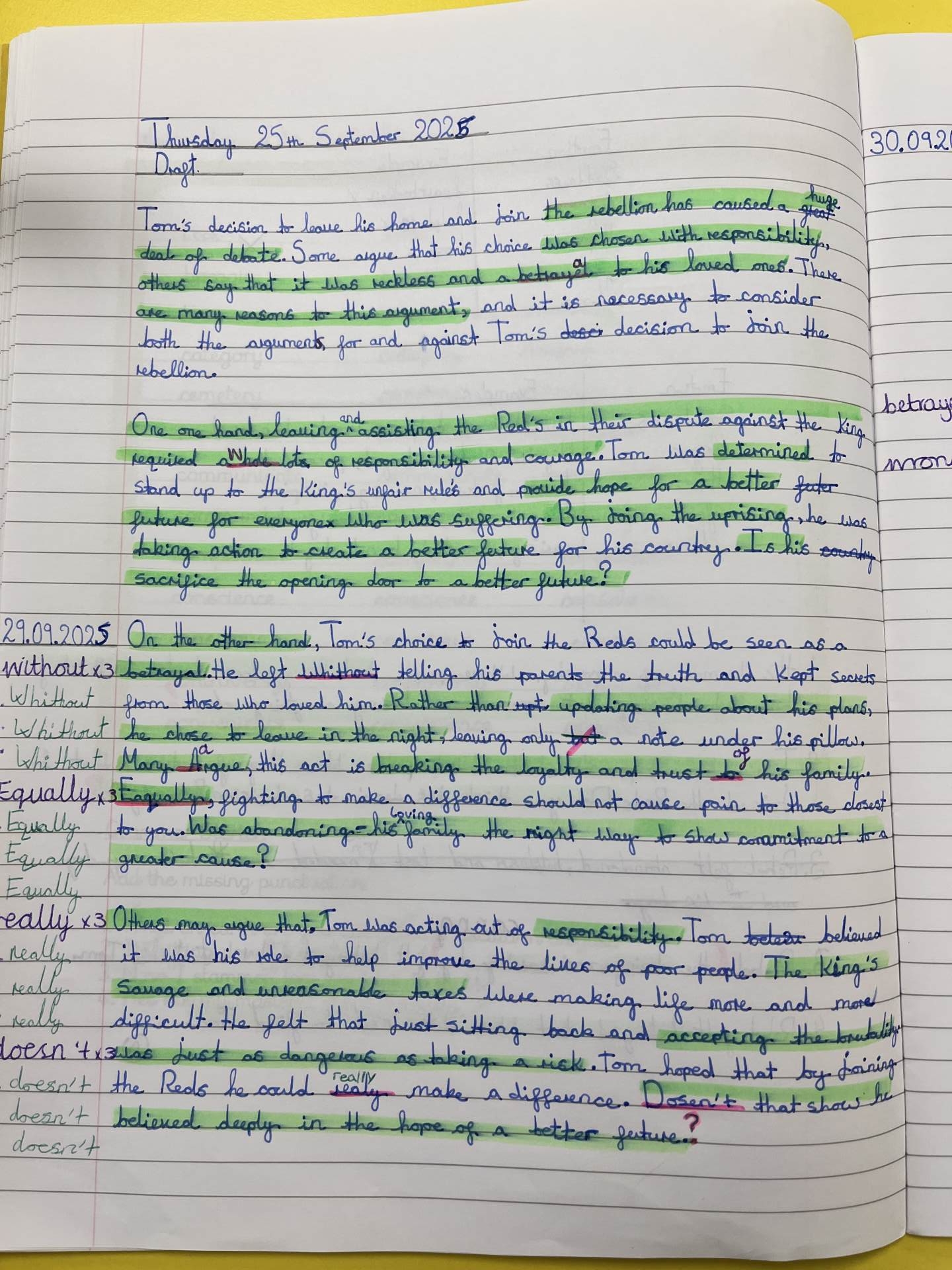
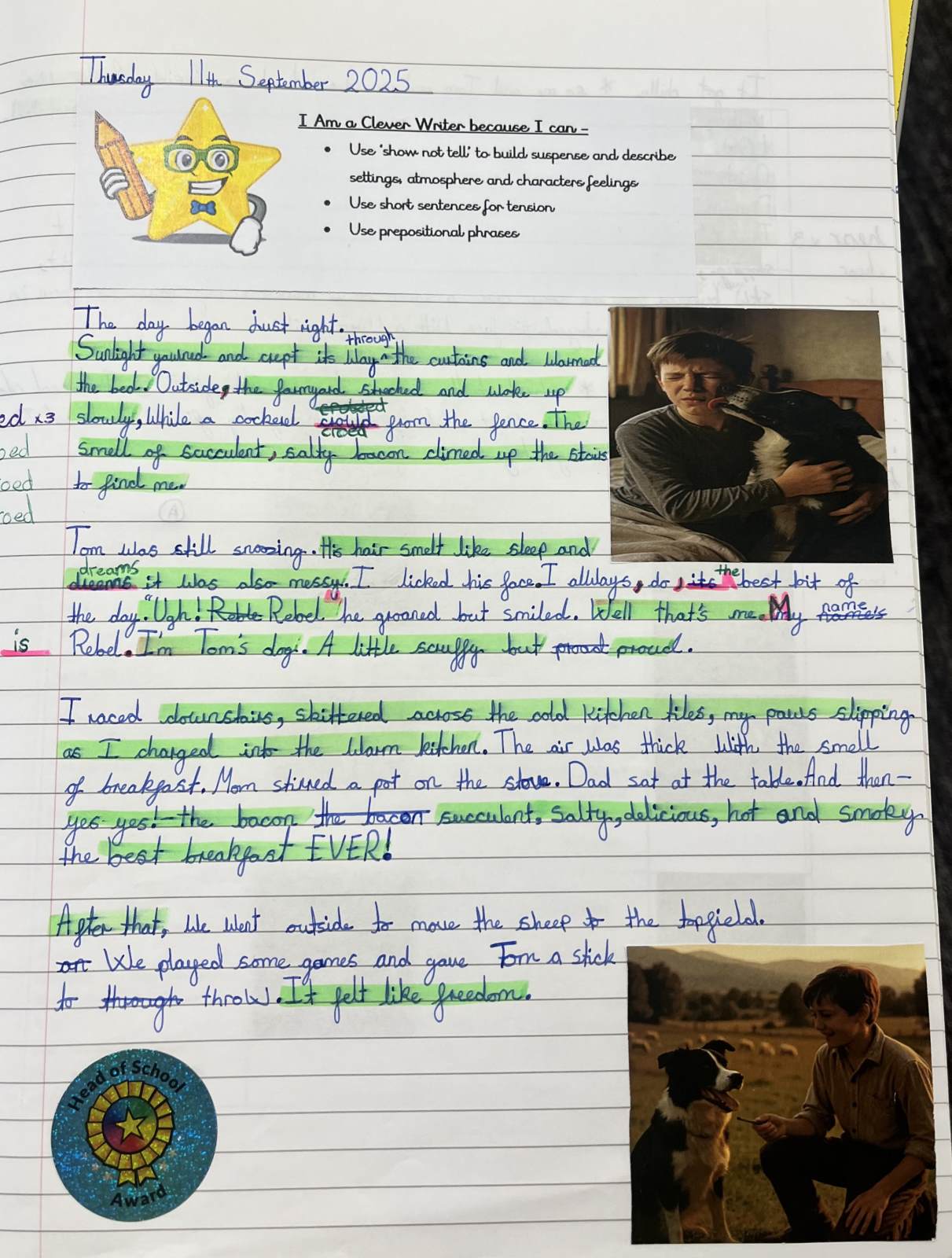
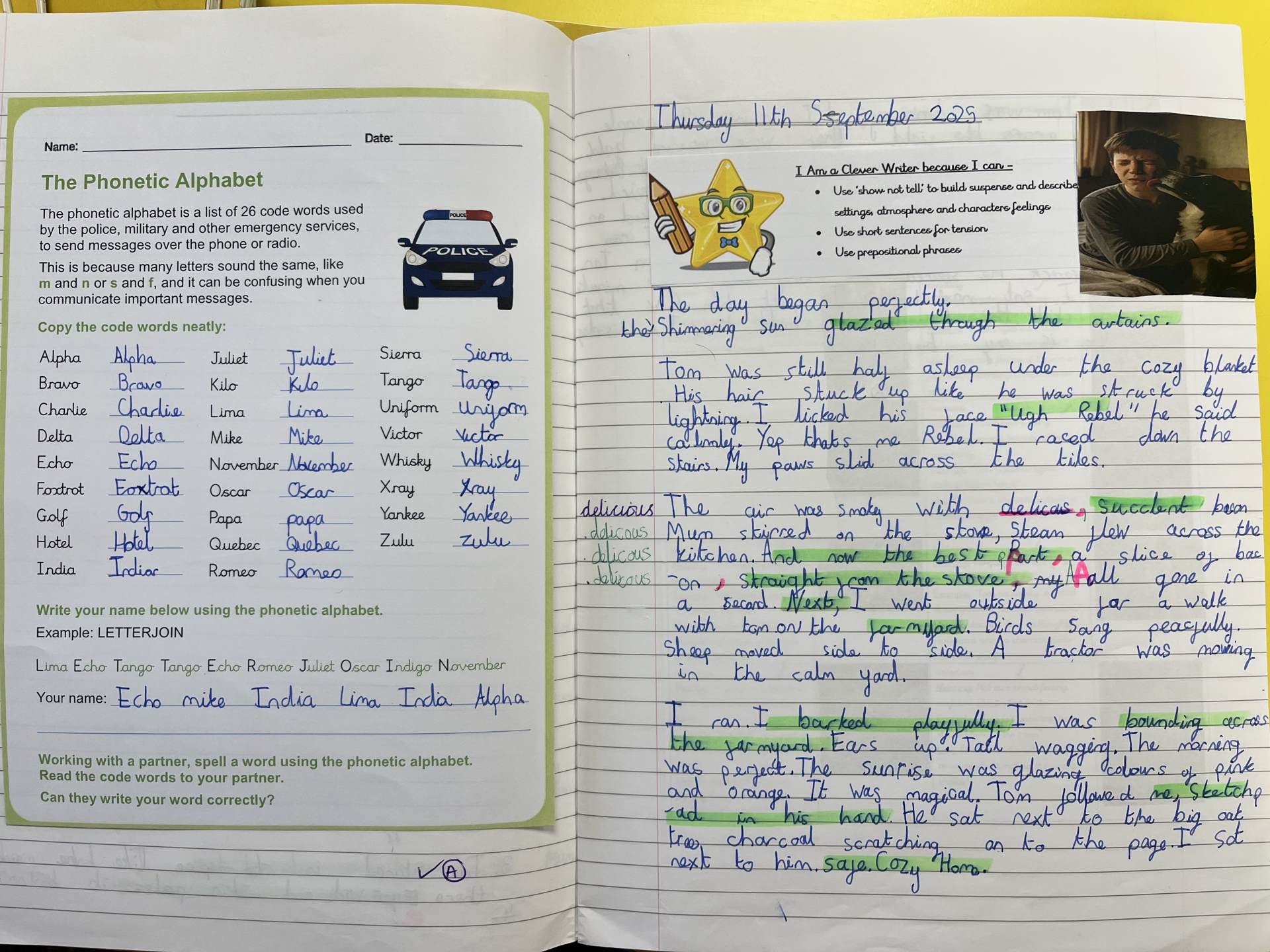
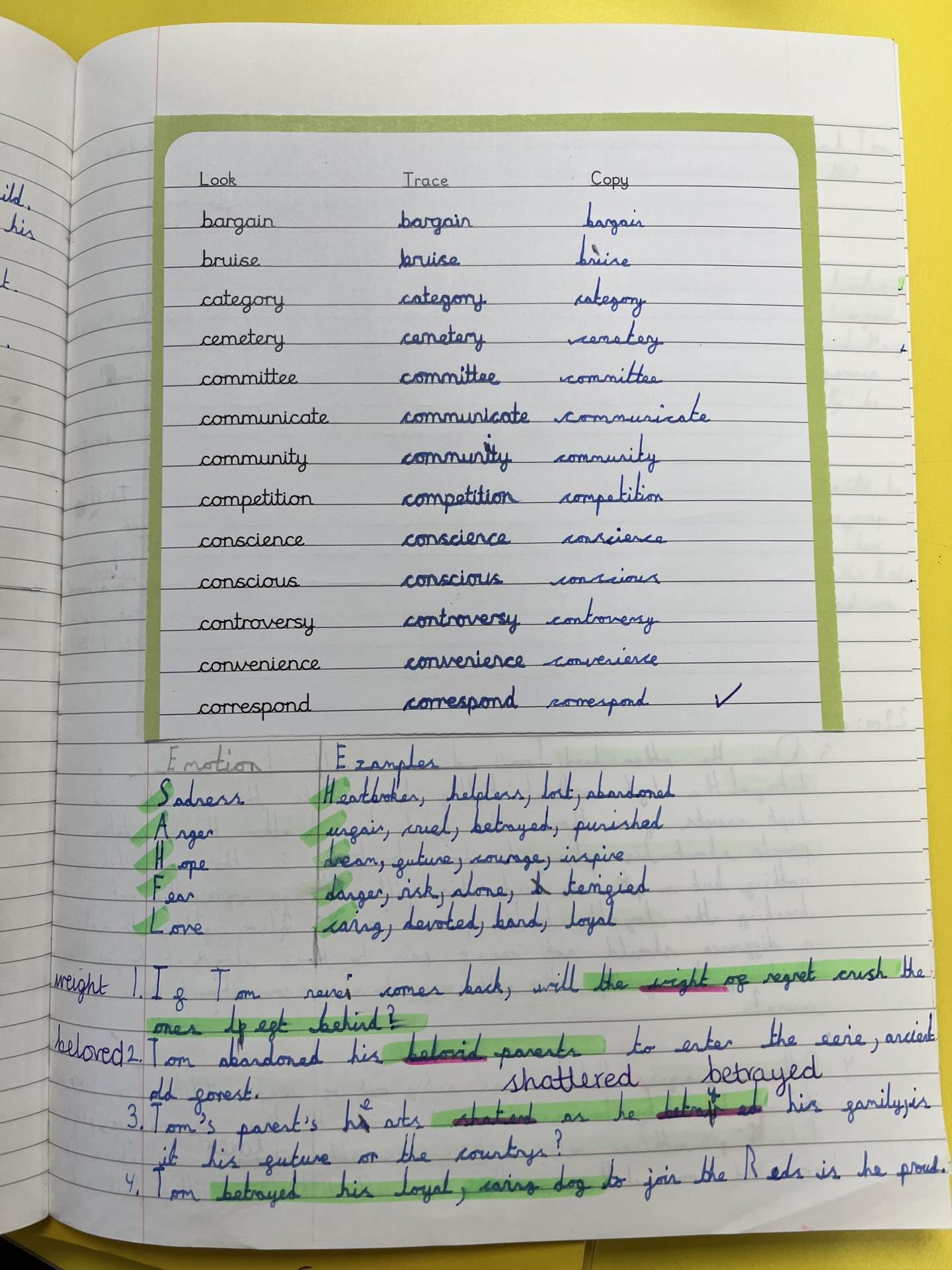
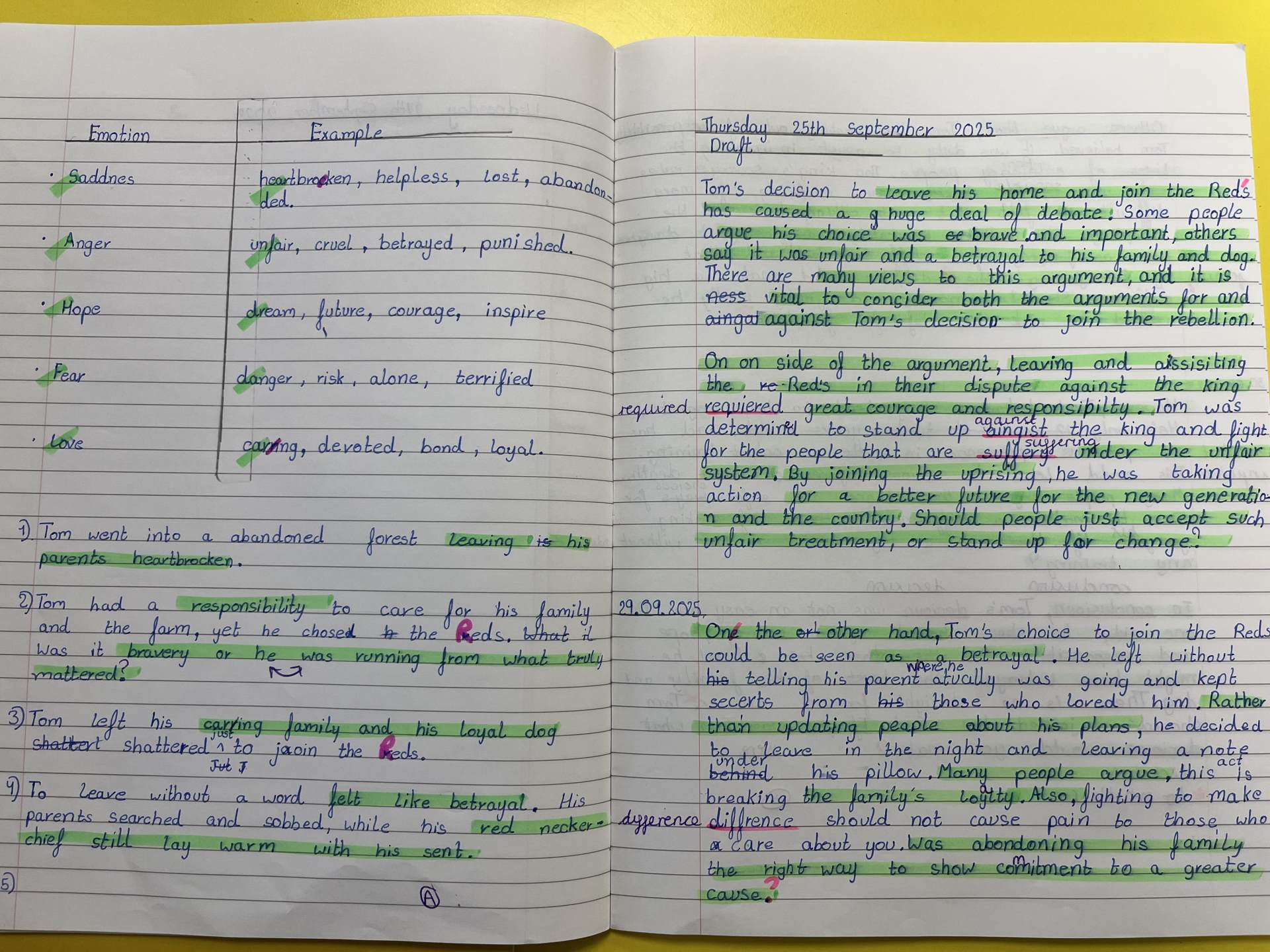
Here are some examples of the amazing writing we produce at Moorcroft...